

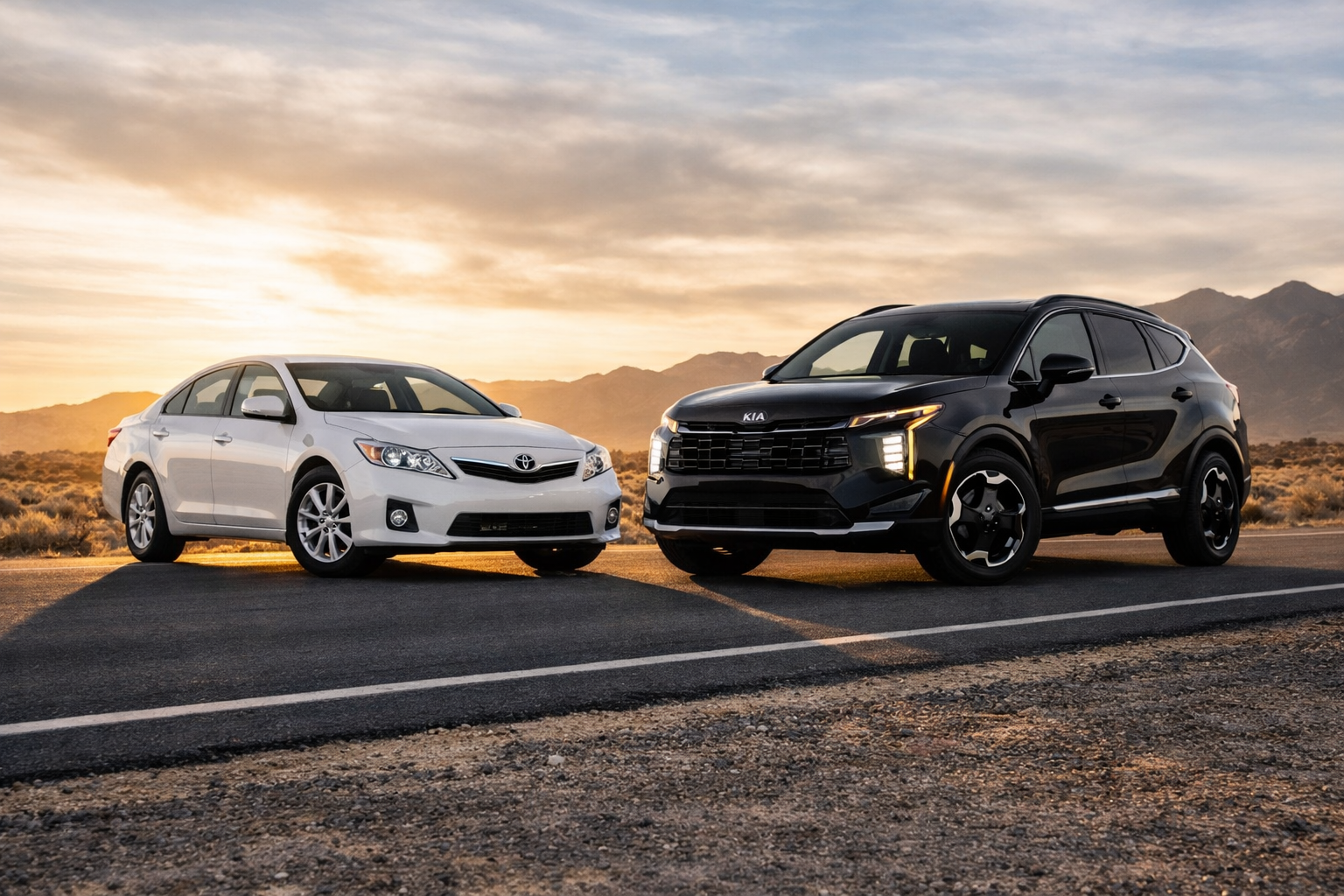
Dubai’s expansive highways and sprawling cityscape make renting a car one of the best ways to explore. When planning a car rental in Dubai, one of the first decisions is whether to choose a sedan or an SUV. Both options are popular on UAE roads, and each comes with its own advantages. Ultimately, the right choice depends on your needs. In this article, we outline five key factors to consider when deciding between a sedan and an SUV in Dubai to help you make an informed choice.
Space and Passenger Capacity
For up to four travelers, a sedan typically provides enough room with comfortable seating for four adults and space in the trunk for luggage. But if you have a larger family or extra gear (for example, multiple suitcases, a stroller, or sports equipment), an SUV might be the better fit. SUVs generally offer more seating (often 5 to 7 seats) and a bigger cargo area, so everyone can sit comfortably without crowding in with the bags. Consider the number of passengers and how much space you’ll need for all your belongings when choosing between these vehicle types.
Travel Itinerary and Terrain
Your travel plans play a major role in this decision. If you plan to stay on well-paved city roads and highways, a sedan will serve you perfectly well for getting around Dubai. However, if your itinerary includes venturing beyond the city, such as a desert safari or trips to mountainous areas, an SUV becomes the sensible choice. Most SUVs offer four-wheel drive and higher ground clearance, allowing them to handle rough terrain or sandy desert tracks that a sedan cannot. In essence, choose a sedan for standard urban and highway travel, but opt for an SUV if you anticipate any off-road adventures or challenging road conditions.
Budget and Fuel Efficiency
Cost is another key factor when deciding on a sedan versus an SUV. Typically, sedans have a lower daily rental rate than SUVs, making them a budget-friendly option. They also tend to be more fuel-efficient so you spend less on petrol for the same distance.
By contrast, SUVs generally come with a higher rental price and burn more fuel per kilometer. There are exceptions — a high-end luxury sedan might cost more than a standard SUV — but in general, sedans win on cost and efficiency. Weigh your budget constraints against the extra space and capability an SUV offers when deciding.
Comfort and Driving Experience
Comfort has a big impact on your enjoyment of the drive. Sedans often deliver a smooth ride and a quiet cabin, which is great for long drives. In contrast, an SUV gives you a higher driving position and a commanding view of the road. An SUV’s larger interior means more legroom and headroom making long journeys more comfortable.
Also consider Dubai’s hot climate: SUVs typically have strong air conditioning (often with rear vents) to cool the cabin quickly, while a sedan’s smaller interior cools down quickly for a couple of occupants. Finally, think about what you’re used to driving — if you usually drive a small car, a big SUV may feel challenging, whereas SUV drivers might find a sedan underwhelming.
Maneuverability and Parking
Navigating busy city areas and parking in popular spots is an important practical consideration. Sedans generally have the edge in maneuverability: their smaller size and tighter turning radius make it easier to weave through traffic and slip into snug parking spaces. In many parking garages, a sedan’s compact footprint means you won’t have to second-guess whether it fits in a slot.
SUVs are bulkier; you sit higher (improving visibility) but must be mindful of the larger dimensions in tight spaces. If you’re not confident handling a bigger vehicle, you may find a sedan less stressful for city driving. However, if you have experience driving large vehicles, an SUV’s commanding presence is rewarding on Dubai’s wide roads.
Sedan vs SUV: Dubai Rental Comparison
To recap the differences, the table below highlights how sedans and SUVs stack up on key factors for a Dubai car rental:
| Factor | Sedan | SUV |
|---|---|---|
| Passenger Capacity & Space | Comfortable for up to 4 passengers; moderate trunk space for luggage | Seats 5–7 (depending on model); ample cargo room for luggage and gear |
| Terrain & Road Use | Ideal for city streets and highways; not suitable for off-road or desert | Built for diverse terrains (many 4×4 models); handles desert and rough roads |
| Cost & Fuel Efficiency | Lower daily rental rates; better fuel economy saves money | Higher rental cost; uses more fuel per km |
| Comfort & Features | Smooth ride, quiet cabin; easy handling; cabin quick to cool for small group | Elevated driving position with great visibility; spacious interior with multi-zone A/C |
| Parking & Maneuverability | Easy to park and maneuver in crowded areas | Large size requires more space and care when parking; higher ground clearance for bumps |
Sedan or SUV: Deciding What Works Best for You
Choosing between a sedan and an SUV for your Dubai car rental comes down to balancing these factors with your priorities. Both vehicle types can serve you well in Dubai, but each shines in different scenarios. If you prioritize budget-friendly travel, fuel efficiency, and easy city driving, a sedan is likely the smarter choice. On the other hand, if you need extra space, plan to explore remote areas, or enjoy the commanding feel of a bigger vehicle, an SUV is worth the added cost. Consider your group size, where you’ll be driving, and what you’re most comfortable with. By weighing these considerations, you can confidently choose the option that will make your Dubai journey enjoyable.